 Noa The Game
The case: ENV Media
The method behind Noa wasn't built to be sold. It was built because we needed it ourselves.
The situation.
ENV Media was founded in 2018 by Fredrik Brännlund and Martin Larsson. Fully remote, no offices, people in nine countries and as many time zones. When the pandemic came, Fredrik noticed the team slipping. Short-term memory, the eye for the bigger picture, focus. It wasn't a dramatic turn, but a slow, gradual drain, and it showed in the work and in the conversations.
So in the fall of 2020 he held a presentation for the team about physical and mental health, and invited them to an experiment. Voluntary, he stressed. No bonus, no recognition for taking part. The only currency was understanding yourself, together.
How it worked.
Everyone who wanted to take part chose a small habit of their own, something that mattered to them personally. The team was split into groups of five, each with a facilitator. The requirement was to report every day. Not to succeed, only to report, yes or no.
Once a week the group met. Each person had a few minutes to share how the week had gone, without the others commenting. It usually took a few meetings before the first person dared to admit a failure. Fenix remembers when it happened:
"I remember that the CEO of the company just said like, 'Yeah, my whole week has been shit, I haven't reported a single day.' ... It just felt like at that moment that we all kind of got a bit closer to each other than we had been before."Fenix, ENV Media
Two years later.

Was it the method that did all of that? No, of course not on its own. But ask anyone who was there, and they point to the same thing: what changed was the people.
The people.
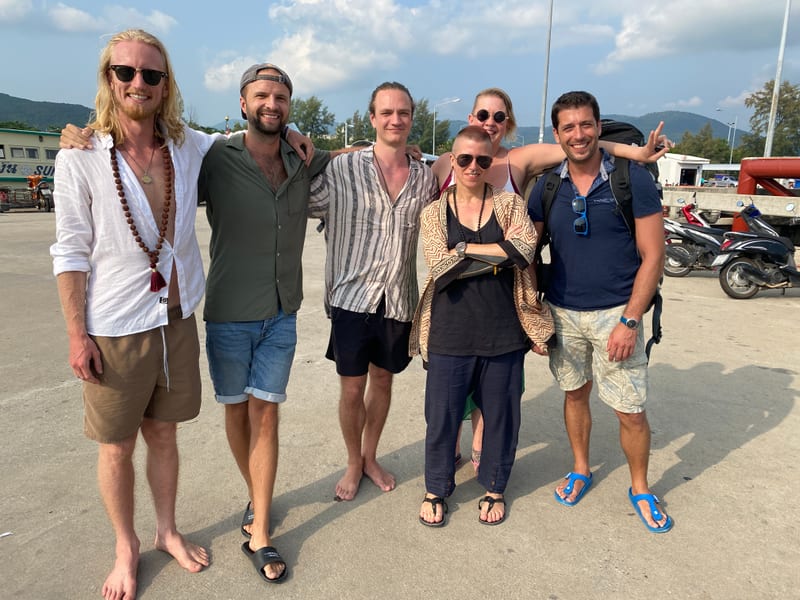
One employee was on thin ice. He was put on a low-priority project with no great expectations. Through the game something happened: he stopped working to please the owners and started working for his own sake. He set goals, shared them, reported and reflected. Today he's the one driving the business forward, and the owners have been able to let go.
Another team member ran every day. The streak is still going. A third learned breathing techniques to fully let go of work at the end of the day, the thing that's so hard when the office lives in your home. Fenix started working in focus sprints and found the same work could be done in half the time.
"All these highly successful people, they also fail sometimes. It was the key to being human together, instead of being my title versus their title."Fenix, ENV Media
"Maybe 2 or 3 people in my call were doubting it was working. They saw the proof in the others. To see the doubters becoming believers, that's the memory I remember the most."Robin, ENV Media
And the weekly calls? Robin puts them at half the value of the whole thing.
Why it shows in the numbers.
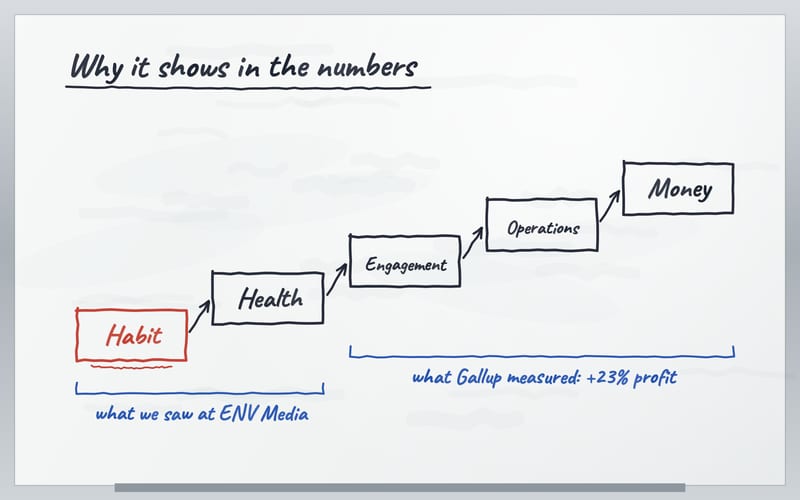
What ENV Media saw on a small scale, Gallup has measured on a large one. In their meta-analysis of more than three million employees, work units in the most engaged quartile have 23 percent higher profitability and 78 percent lower absenteeism than those in the least engaged quartile.
Gallup has measured what engagement delivers. Far less has been written about how to build it. At ENV Media it was built one habit at a time, with a group that asked how it went.
What Fredrik took with him.
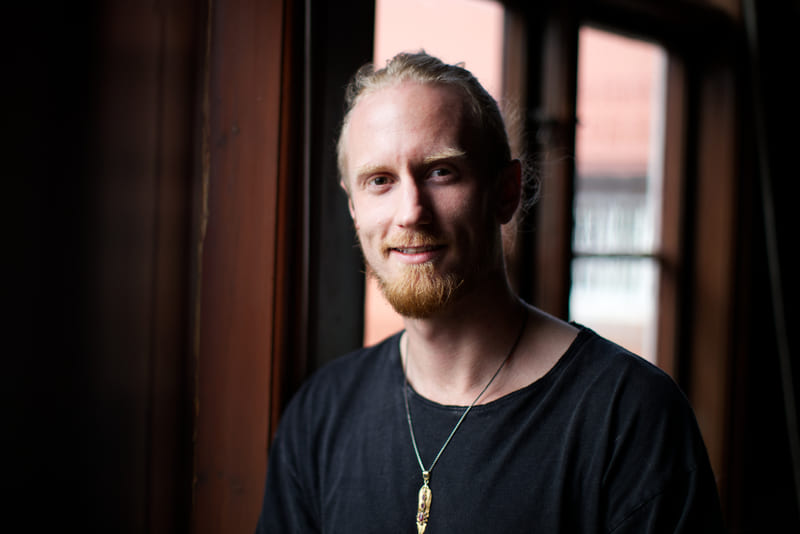
Before this I had a fairly cynical view of people, honestly. I assumed most people look out for themselves. Watching what happened in the team changed that. It takes so little for us to start carrying each other, and it gave me hope for humanity.
— Fredrik Brännlund